Overview
When designing interfaces such as USB, Ethernet, HDMI, and RS-485, we often encounter this question:
"Will the capacitance in the protection device affect high-speed signals? The answer is—yes, and the impact is often greater than you think.
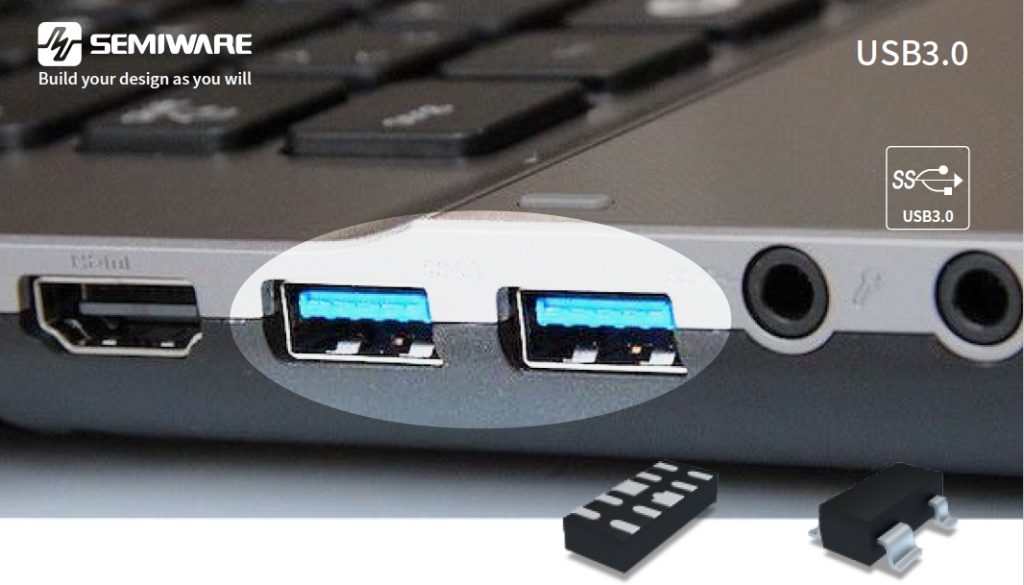
Especially for high-speed interfaces, if the wrong capacitance is chosen for the protection device, not only will the bandwidth be compressed, but it will also lead to device connection failures and signal instability.
This article, from an engineer's perspective, clearly explains the real impact of the capacitor in the protection device on the data rate and provides selection suggestions that can be directly referenced.
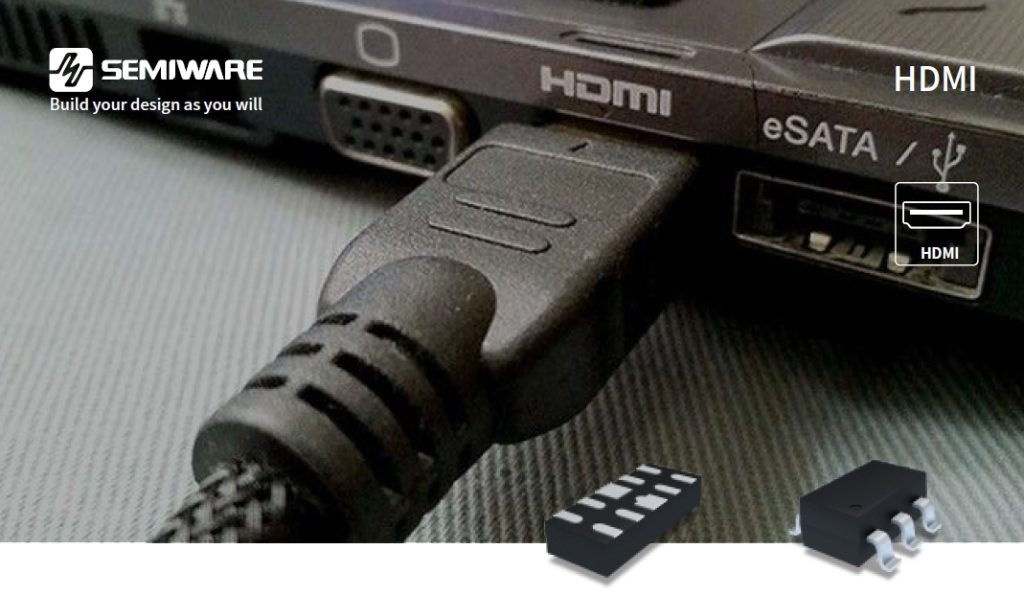
🔍 What is TVS Diode Capacitance?
Junction capacitance is the parasitic capacitance between the TVS diode terminals, usually measured in pF.
🔍 Why Is Capacitance Important for Signals?
👉 Simply put, the capacitance in a TVS device acts like a small capacitor on the circuit. Together with the impedance of the signal line (typically 50 Ω), it creates a low-pass filter effect:
High-frequency components are clipped → the signal becomes more rounded → the rise time is slower → transmission becomes inaccurate.
📊 Recommended Maximum TVS Capacitance by Interface Type
| Interface Type | Typical Data Rate | Recommended Capacitance |
| RS-232 | < 1 Mbps | < 100 pF |
| CAN、RS-485 | 1 Mbps | < 30 pF |
| USB 2.0 | 480 Mbps | < 5 pF |
| USB 3.0 / 3.2、HDMI | 5–10 Gbps | < 0.5–1 pF |
| Gigabit Ethernet | 1 Gbps | < 1 pF |
⚠️ Common Mistake Examples
❌ Using a high-capacitance TVS on USB 2.0
USB 2.0 may not seem “high-speed,” but it is still very sensitive to capacitance.If you use a 20–30 pF TVS, you may see issues such as:
- The computer fails to recognize the device
- Random disconnections
- File transfers running much slower than expected
Many engineers think it's a cable or driver problem, but often it’s simply the TVS slowing down the signal.
❌ Gigabit Ethernet stuck at 100 Mbps
Gigabit Ethernet should normally connect at 1 Gbps. But if you use a TVS with 3–5 pF capacitance, the system may fall back to 100 Mbps.
Typical symptoms include:
- Link speed shows only 100 Mbps
- Unstable connection
- Inconsistent data throughput
The Ethernet chip is fine—it's the excessive capacitance filtering out the high-frequency components.
❌ HDMI / USB 3.0 flickering or unstable connection
High-speed interfaces (5–10 Gbps) are extremely sensitive. Even 1 pF of extra capacitance can cause problems.
Possible issues include:
- Screen flicker
- Intermittent video dropout
- Devices failing to connect occasionally
- Lower-than-expected resolution or unstable display
High-speed signals are like cars on a fast highway—any small obstacle can ruin the flow.
🧭 TVS Selection Principles (Very Practical)
1️⃣ Select Capacitors Based on Data Rate
- Low Speed: Tens of pF are sufficient
- Medium Speed: < 15 pF
- High Speed: < 1 pF (Even < 0.5 pF is required)
2️⃣ Lower capacitance is better, but protection capability cannot be sacrificed. Therefore, in addition to capacitance value, the following should also be considered:
- Clamping Voltage
- IEC61000-4-2 Rating
- Peak Power
3️⃣ Note that wiring can also introduce additional capacitance.
- Vias
- Trace Length
- Asymmetrical Layout
- Differential Pair Damage
These can all cause cumulative losses at high-speed interfaces.
⚠️ Summary
- The larger the capacitance, the more limited the signal bandwidth and the more noticeable the distortion.
- High-speed interfaces must use TVS devices with ultra-low capacitance (<1 pF).
- Low-speed interfaces are more forgiving, but protection capabilities must be considered.
- Correct selection can avoid common problems such as USB enumeration failures, gigabit network speed reduction, and HDMI screen flickering.
If you are designing high-speed communications, power protection, or interfaces, you must consider the capacitance value of the protection devices.
👀 Looking for Reliable Protection for Your High-speed Interfaces?
Semiware delivers comprehensive interface protection solutions—covering low-capacitance TVS, surge protection, and ESD arrays—ready for fast sampling and stable supply.
Contact us for device selection, alternatives, or procurement support. 👉 https://en.semiware.com/contact/



Comments (0)