Looking for a 72R110X Replacement? SK72-110 Explained
The SK72-110 is a resettable PPTC fuse designed to provide dependable overcurrent protection for DC circuits operating up to 72Vdc, with a maximum short-circuit current rating of 40A. It helps safeguard sensitive electronic components by limiting abnormal current during fault conditions and automatically returning to normal operation once the fault is cleared, minimizing system downtime and maintenance requirements.
🔹 SK72-110 Product Highlights
| Parameter | Value |
| Part Number | SK72-110 |
| Package | SK72/72R |
| IHOLD (Max) (A) | 1.1 |
| ITRIP (Min) (A) | 2.2 |
| VMAX (V) | 72 |
| IMAX (A) | 40 |
| Time to Trip Current (A) | 5.5 |
| Time to Trip Time (s) | 8 |
| RMIN (Ω) | 0.15 |
| RMAX (Ω) | 0.27 |
🔹 Product Highlights
- Resettable PPTC fuse providing automatic overcurrent protection
- Rated for up to 72Vdc maximum operating voltage
- 40A maximum short-circuit current capability
- Fast response to overcurrent and short-circuit conditions
- Automatically resets after fault removal, reducing downtime
- Stable performance and high reliability for long-term use
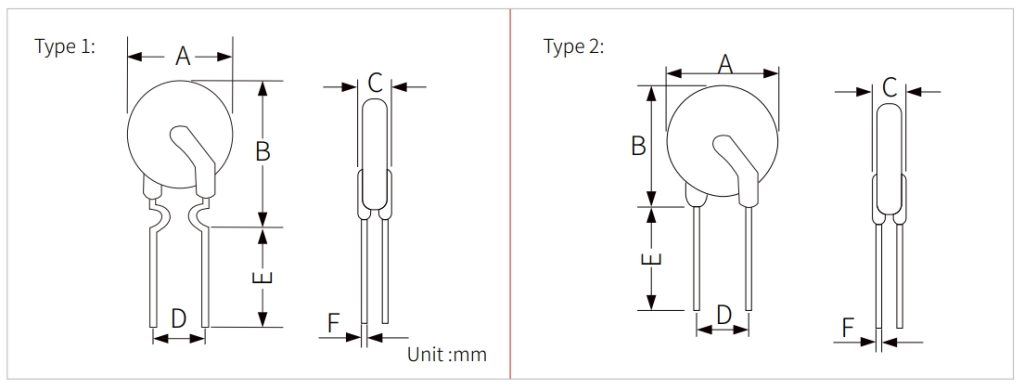
🔹 SK72-110 Outline Drawing
🔹 SK72-110 Typical Use Cases
- DC power input protection for chargers and adapters
- Battery-powered systems and energy storage equipment
- DC-DC converters and power management modules
- Communication and networking devices
- Automotive electronics and auxiliary systems (72Vdc)
- Consumer electronics requiring resettable overcurrent protection
🚀 Why Choose Semiware?
1️⃣ In-House Manufacturing for Cost Efficiency
- Our own production facility allows for stable quality control while optimizing manufacturing costs.
- Ensures consistent supply without relying on external vendors.
2️⃣ Flexible Minimum Order Quantity (MOQ)
- We support adjustable MOQ options to meet both small and large production needs.
- Helps customers reduce inventory pressure and align orders with production schedules.
3️⃣ Volume-Based Pricing and Bulk Orders
- Large-quantity orders can benefit from negotiable pricing to optimize procurement budgets.
- Encourages long-term collaboration with cost advantages for high-volume production.
💡 Tips for Choosing PPTC Resettable Fuse Replacement
When selecting an alternative to PPTC, several factors should be carefully reviewed:
- Hold current and trip characteristics to ensure proper protection behavior
- Voltage rating compatibility for low-voltage circuits
- Radial-leaded package to match existing PCB layouts
- Time-to-trip performance for effective fault response
- Compliance requirements, such as RoHS and lead-free standards
- A suitable alternative should meet these requirements while maintaining stable and repeatable performance.
If you are designing compact circuits or upgrading overcurrent protection, Semiware provides a full range of SMD PTC fuses with stable performance and flexible supply. Detailed datasheets, cross-reference support, and technical guidance are available to help you select the right fuse for your application.
👉 Contact us to request product specifications, samples, or cross-reference recommendations.
📩 https://en.semiware.com/contact/
❓ FAQs
1.What is PPTC Thermistors?
PPTC Thermistors is resettable overcurrent protection device that increases its resistance when excessive current flows and automatically resets after the fault is removed.
2.How does it compare to traditional fuses?
Traditional fuses are single-use and must be replaced after tripping, while PPTC fuses reset automatically and require no maintenance—ideal for consumer and portable electronics.
3.How does a PPTC fuse work?
During overcurrent, the polymer material heats up and expands, sharply increasing resistance to limit current. After cooling, it returns to its low-resistance state, restoring normal operation.
4.What is the difference between PPTC and PTC?
PPTC is a polymer-based PTC device designed specifically for resettable overcurrent protection, while standard PTC components are typically used for temperature sensing or inrush current limiting.
5.What is the difference between NTC and PTC?
NTC resistance decreases as temperature rises (used for sensing and inrush limiting), while PTC resistance increases with temperature (used for protection or heating functions).



Comments (0)