🔎 Overview
Microphone sensors are core components for capturing sound in modern communications, entertainment, and industrial applications. From simple voice recording to high-fidelity audio processing, they convert sound energy into processable electrical signals.
However, microphones and their preamplifier circuitry are susceptible to transient voltages, electrostatic discharge (ESD), or interference during operation. Appropriate protection schemes are crucial to ensuring high fidelity and long-term reliability of audio signals.
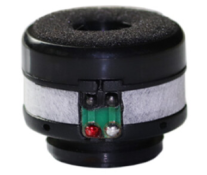
📌 Microphone Sensor Working Principle
The core of a microphone sensor is the transducer: converting acoustic energy (sound waves) into electrical energy (voltage). The basic process is as follows:
🔸 Sound Wave Input: Sound waves from the environment strike the microphone diaphragm.
🔸 Diaphragm Vibration: The diaphragm responds to the sound waves, producing mechanical vibrations. This vibration reflects the amplitude and frequency of the sound waves.
🔸 Energy Conversion Mechanism: Vibration is converted into an electrical signal through different mechanisms. Common types include:
- Electromagnetic (Dynamic Microphone): Utilizes a coil and magnetic field to induce current.
- Capacitive (Condenser Microphone): The diaphragm and fixed electrodes form a capacitor; vibration changes the capacitance value, generating a signal.
- MEMS Microphone: Micromechanical structures combined with capacitance or piezoelectric effects; small size and high sensitivity.
- Piezoelectric Microphone: Piezoelectric materials generate voltage when subjected to force.
🔸 Signal Amplification and Regulation: The converted electrical signal is usually weak and requires a preamplifier for amplification. It may also undergo filtering, equalization, or noise reduction processing before being output to the recording, processing, or transmission system.
⚡ Why Do Microphones Need Protection?
Microphones, especially MEMS and condenser microphones, are highly sensitive to their electrical environment. Common risks include:
- ESD (Electrostatic Discharge): Static electricity from the human body or the operating environment can momentarily damage sensitive components.
- Transient voltage surges: Lightning strikes or power fluctuations can damage preamplifiers.
- Signal interference: Electromagnetic noise degrades audio signal quality.
These problems not only affect sound quality but can also shorten device lifespan.
🚀 Semiware Solutions: Reliable Protection for Microphones
To ensure microphone performance and reliability, Semiware offers protection and optimization solutions for microphones and audio modules:
1️⃣ Voltage Transient Protection (TVS Diodes)
Semiware's SMBJ series TVS diodes quickly absorb transient voltages, protecting preamplifiers and microphones from lightning strikes, power surges, or other overvoltages.
2️⃣ ESD Protection
Our capacitive ESD protection devices suppress electrostatic discharge while maintaining high-frequency signal integrity, suitable for MEMS microphones and high-sensitivity condenser microphones.
3️⃣ Signal Integrity Optimization
In complex circuit environments, Semiware offers miniature protection solutions that can be directly integrated into microphone module circuitry, reducing interference and ensuring high-fidelity audio signals.
Semiware's TVS and ESD solutions help audio equipment withstand transient voltages and electrostatic interference, ensuring high signal fidelity and long-term equipment reliability.
📊 Conclusion
Microphone sensors convert sound into electrical signals through diaphragm vibration and transduction mechanisms, making them the core of audio equipment. To ensure reliable operation of the microphone and its preamplifier in complex environments, appropriate electrical protection and signal optimization solutions are indispensable.
Explore more circuit protection and application solutions on our website.↗️ https://en.semiware.com/application/
We welcome you to provide specific circuit parameters and application scenarios. Our technical team can assist in evaluating and matching the most suitable TVS and ESD protection solutions.