Overview
Smart robotic vacuum cleaners integrate multiple sensitive electronic components, including LiDAR modules, wireless communication units, motor controllers, and battery management circuits. During daily operation, static electricity generated by friction between brushes, wheels, and floors can cause unexpected system resets or permanent damage to internal ICs.
I. Common Sources of ESD in Robotic Vacuum Cleaners
Sweeping robots are prone to static electricity during operation. The main reasons include:
- Frictional charging: The roller brush and side brush rub against the floor (especially carpets and hard floors) at high speed.
- Dry air: Low humidity environment aggravates the accumulation of static electricity.
- Plastic parts: Plastic materials such as robot shells and wheels are easy to be charged.
To improve reliability, compact ESD protection">ESD protection devices such as SD05C ESD suppressors are widely used to protect critical signal interfaces and electronic circuits in smart home devices.
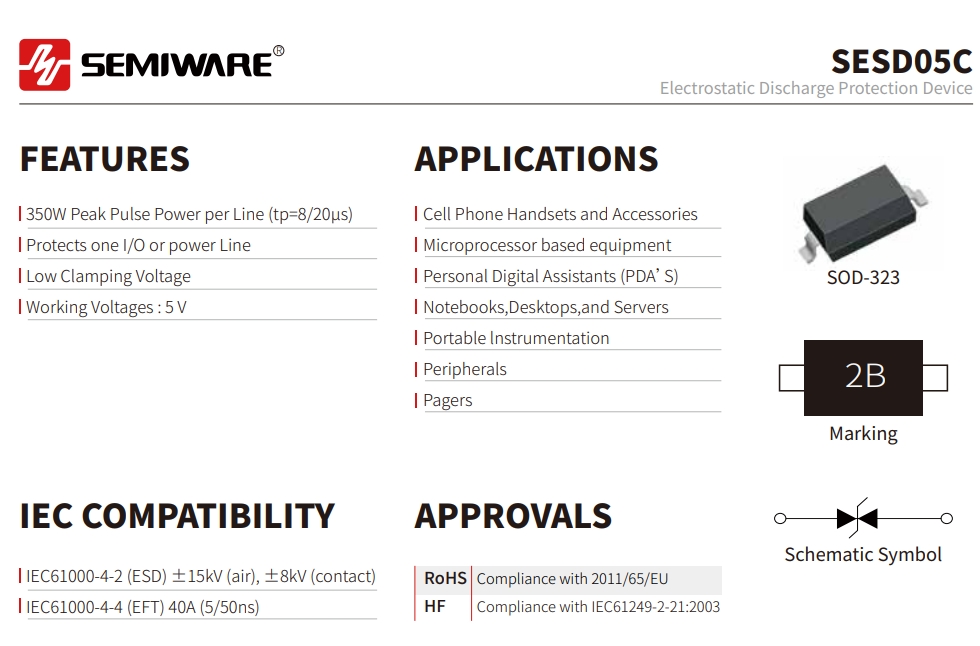
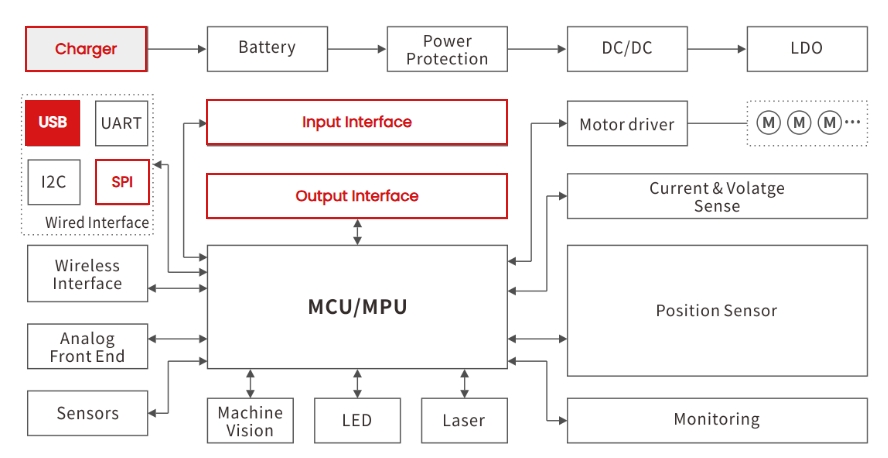
II. Key Circuits Requiring ESD Protection in Robotic Vacuum Cleaners
Robot vacuums contain multiple electronic modules that require protection against transient voltage events.
- LiDAR and Navigation Sensor Protection
Sensor interfaces typically transmit high-speed digital signals between the sensor module and the main controller. Because these signal lines are sensitive to voltage spikes, ESD (Electrostatic Discharge) protection components are required to:
- Clamp transient voltages during electrostatic events
- Protect sensor ICs and MCU (microcontroller) input pins
- Maintain signal integrity during normal operation
With its low-capacitance characteristics, the SD05C is ideally suited for protecting high-speed signal interfaces without significantly affecting signal transmission performance.
- Wi-Fi and Bluetooth Module Protection
Smart robot vacuums rely on wireless connectivity for functions such as:
- Mobile app control
- Cloud communication
- Firmware updates
- Smart home integration
However, wireless modules contain sensitive RF (Radio Frequency) and communication circuitry that is susceptible to external electrostatic interference.
Placing the SD05C near communication interfaces provides rapid transient voltage suppression, thereby enhancing the reliability of the wireless control system.
- MCU and Control Circuit Protection
The main controller manages tasks such as:
- Sensor data processing
- Motor operation
- Navigation algorithms
- User commands
Since MCUs operate at low voltages, excessive transient voltages can easily cause malfunctions.
By installing ESD suppressors near vulnerable signal lines, designers can reduce the voltage stress applied to the controller, thereby improving system stability.
IV. Key Features of SD05C for Robotic Vacuum Cleaner Applications
| SD05C Parameter | SD05C Specs | SD05C Application Benefit |
| Working Voltage | 5V | Compatible with low-voltage electronic circuits |
| Peak Pulse Power | 350W (8/20μs waveform) | Handles transient voltage pulses |
| ESD Protection | IEC 61000-4-2 ±8kV contact / ±15kV air discharge | Suitable for consumer electronics applications |
| Response Time | <1ns | Provides fast protection against ESD events |
| Leakage Current | Low leakage current | Supports low-power standby devices |
| Package | SOD-323 (1.8 × 1.4mm) | Saves PCB space in compact designs |
Conclusion
As smart robotic vacuum cleaners continue to integrate more advanced sensors, wireless communication, and intelligent control functions, circuit reliability becomes increasingly important.
Although ESD protection">ESD protection devices are small components, they play a critical role in protecting sensitive electronics from unexpected transient events.
About Semiware
Semiware provides a wide range of circuit protection devices, including ESD protection">ESD protection diodes, TVS diodes, and transient protection solutions for consumer electronics, smart home devices, automotive, and industrial applications.
For more information, please visit semiware official website: https://en.semiware.com/