I. What is AEC-Q101?
Simply put, AEC-Q101 is a reliability certification standard for automotive electronics, specifically for discrete components such as diodes, MOSFETs, TVS devices, and ESD protection devices.
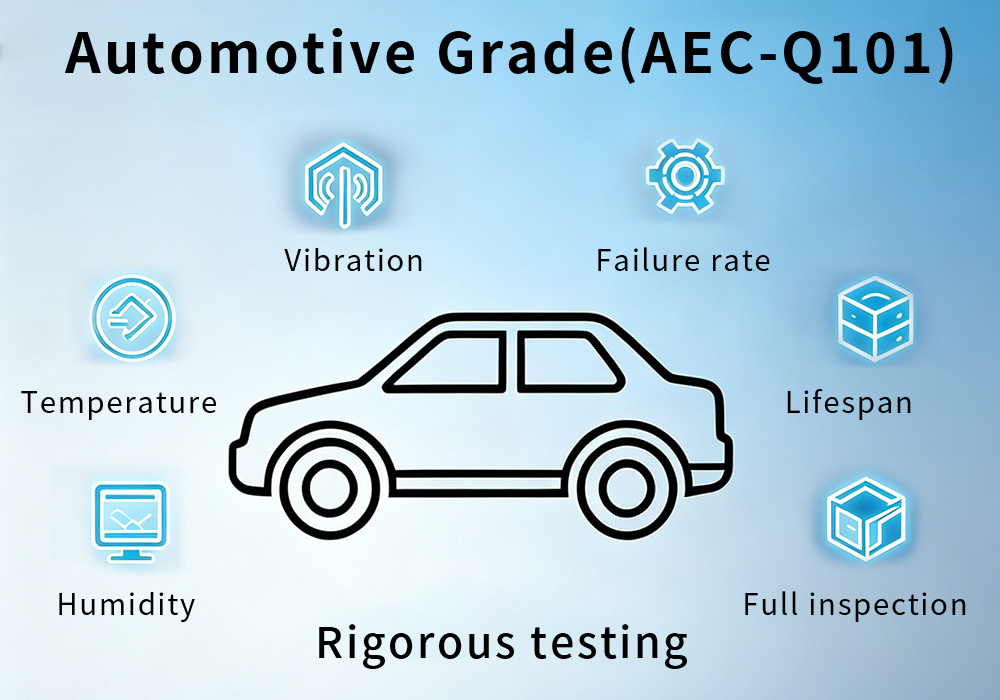
Importantly, AEC-Q101 does not specify electrical parameters or performance indicators for devices; its core focus is long-term reliability. Why? Because automotive electronics, unlike mobile phones, cannot fail after three years. Instead, it needs to ensure that devices will not easily fail throughout the entire lifespan of a car (approximately 15 years/240,000 kilometers), even under extreme temperatures, humidity, vibration, and current surges.
II. Why is AEC-Q101 so important for hardware design?
1️⃣ Industry Requirements
Major suppliers and OEMs (such as Bosch, Toyota, and BYD) require that discrete semiconductors used in pre-installed automotive systems must be AEC-Q101 certified.
2️⃣ Guaranteed Reliability
Automotive-grade components don't prioritize top-tier performance, but rather absolute reliability. AEC-Q101 undergoes dozens of tests, systematically verifying the survivability of components in real-world automotive environments.
3️⃣ Shorter Development Cycles, Reduced Costs
Components that pass AEC-Q101 reduce failure investigation time during EMC and environmental testing phases. Furthermore, ADAS modules using compliant automotive-grade protection components significantly increase the success rate of passing the ISO 10605 electrostatic discharge test on the first attempt.
III. Analysis of AEC-Q101's Core Testing Dimensions
| Test Categories | Test Items | Purpose |
| Environmental Stress | Temperature Cycling (TC), H3TRB, HAST | Evaluates device reliability under thermal cycling and high-temperature/high-humidity conditions, verifying resistance to thermal fatigue and package integrity. |
| Mechanical Stress | Vibration Test, Mechanical Shock Test | Simulates vibration and shock encountered during vehicle operation to assess mechanical robustness of the device and package. |
| Electrical Reliability | UIS (Unclamped Inductive Switching), HTGB (High Temperature Gate Bias), High-Temperature Leakage Current Test | Verifies device stability and survivability under high-voltage, high-temperature, and transient electrical stress conditions. |
| Accelerated Life Testing | HTOL (High Temperature Operating Life), ELFR (Early Life Failure Rate) | Screens out potential early-life failures and predicts long-term reliability performance. |
| Package & Process Reliability | Lead-Free Reflow Test, Bond Strength Test, DPA (Destructive Physical Analysis) | Validates package quality, manufacturing consistency, and internal structural integrity. |
IV. Application Scenarios
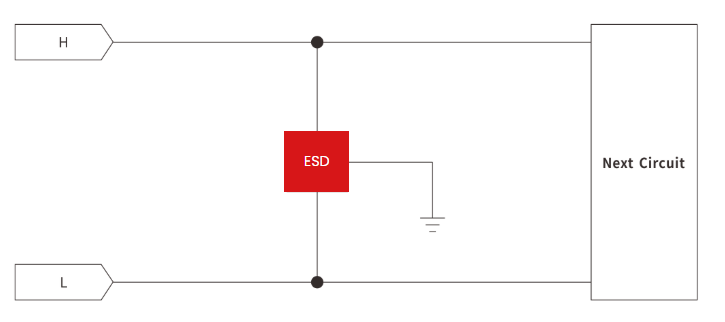
- CAN Bus ESD Protection
Challenges: ESD (±30kV) and power fluctuations can easily damage transceivers.
Solution: An integrated ESD array TPSE23T20B24LB with 13pF capacitor is used for electrostatic discharge (ESD) protection, passing automotive ESD tests without affecting the signal.
- BMS
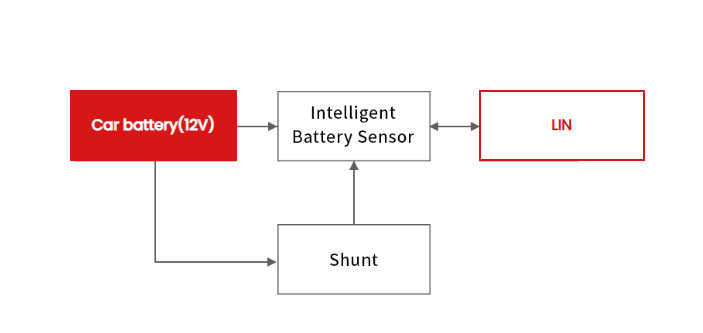
Challenge: Under an 800V platform, the transient voltage after load dump can reach 202V+, far exceeding the withstand voltage of conventional DC-DC converters.
Solution: Semiware SM8S series TVS (such as SM8S24A, SM8S33CA) are AEC-Q101 certified, meeting ISO 7637-2 5a/5b and ISO 16750-2 requirements, with an operating temperature range of -55℃ to +175℃.
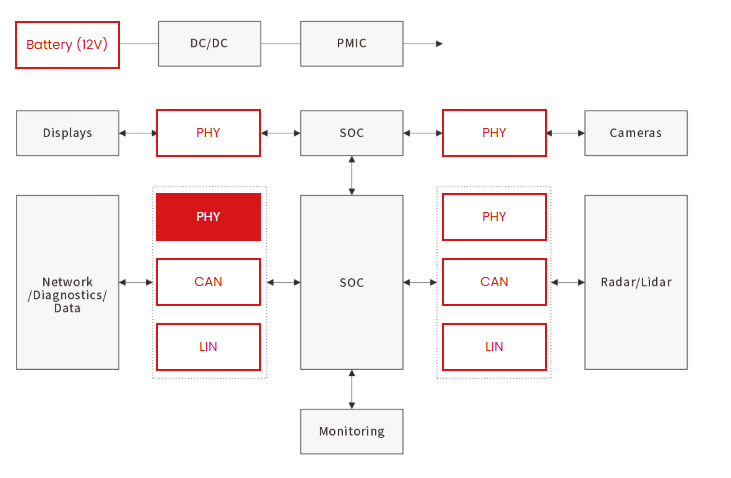
- ADAS Cameras and Sensors
Challenge: High-speed links such as LVDS and USB 3.0 are extremely sensitive to parasitic capacitance.
Solution: Semiware's ultra-low capacitance automotive-grade ESD array, such as the TPSEULC0524P, with a capacitance of only 0.3pF (IO-IO), a response time of <0.5ns, and AEC-Q101 certification.
Conclusion
In automotive electronics, each TVS or ESD device is more than just a component; it carries the responsibility for system reliability and safety. Choosing the right device is like installing an "invisible insurance" layer on your circuit, providing reliable protection even against high voltage, electrostatic discharge, or high-speed signal interference.
As a leading domestic provider of circuit protection solutions, Semiware has been deeply involved in the automotive electronics field for many years. Our AEC-Q101 product line is widely used in:
- BMS (Battery Management System)
- Smart Cockpit
- Autonomous Driving Domain Controller
From component selection and testing to rectification and optimization, the Semiware technical team provides one-stop support to ensure your design operates reliably in high-reliability scenarios.
👉 Contact us to discuss Semiware's full range of automotive-grade TVS/ESD solutions!