Introduction
3.5mm headphone jacks, audio input/output jacks, microphone jacks, and other connectors are common external interfaces in consumer electronics, smart devices, industrial terminals, and automotive electronic systems.
Because these interfaces are usually directly exposed to the outside of the device, and users frequently plug and unplug headphones, microphones, or audio cables during use, audio interfaces are susceptible to electrostatic discharge (ESD).
I. Analysis of ESD Sources in Audio Interfaces
- Open Connection Structure Exposed to the External Environment
Unlike signals inside the PCB, audio interfaces are usually located on the edge of the device casing, allowing users to directly contact the metal terminals.
For example:
- 3.5mm headphone jack
- Microphone jack
- Line-in / Line-out interface
- Audio expansion interface
When a person with static electricity touches the interface, the ESD current will preferentially seek a low-impedance path to release, and audio signal lines are often directly connected to the internal audio chip.
ESD Path:
Human Body → Audio Interface → Signal Line → Audio Codec → GND
Without effective protection, a sudden high-voltage pulse may directly damage the sensitive internal structure of the chip.
- Frequent plugging and unplugging by users generates electrostatic discharge (ESD).
Audio interfaces are typical "hot-swappable" interfaces. They may undergo dozens or even hundreds of operations daily, thus placing higher pressure on long-term reliability.
In actual use:
- When plugging in headphones, the metal plug may carry static electricity.
- When unplugging headphones, the interface contacts may generate transient voltage.
- When the user touches the area near the jack, ESD may occur.
- Audio signal circuits typically have low voltage withstand capability.
To achieve low noise and high sensitivity, internal audio systems typically use low-voltage processes, resulting in limited tolerance to ESD transient impacts.
Electrostatic discharge from the human body or external devices may enter the internal circuitry through the audio signal lines, causing damage to the audio chip (Codec).
II. Key Design Considerations for ESD Protection of Audio Interfaces
- Low Clamping Voltage
ESD protection devices need to conduct quickly to rapidly discharge transient high voltages to ground. Lower clamping voltage reduces residual voltage entering the downstream IC, improving chip safety.
- Low Leakage Current
Audio lines are used for weak signals; protection devices should not affect the audio signal during long-term operation.
- Appropriate Capacitance Value
Although audio frequencies do not require extremely low capacitance like high-speed interfaces such as USB and HDMI, excessive parasitic capacitance can still affect audio frequency response and signal quality.
- Compliance with IEC 61000-4-2 Standard
Industrial and consumer electronics products typically need to meet:
±8kV Contact Discharge, ±15kV Air Discharge
III. Semiware Audio Interface ESD Protection Circuit Reference
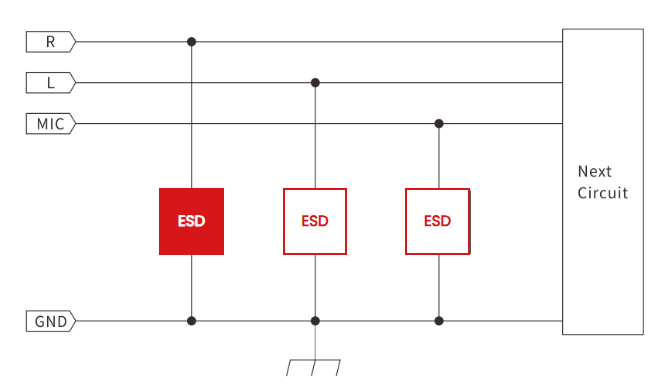
Recommended ESD Devices:
| Part Number | Working Voltage | Leakage Current | Capacitance | ESD Protection | Package |
| SE5D10B5.0A | 5V | 1µA | 15pF | ±8kV | SOD-523 |
| SE10F10B5.0A | 5V | V | 15pF | ±25kV | DFN1006-2L |
IV. Typical Application Scenarios
Semiware ESD protection devices can be used in:
- Smartphone audio interfaces
- Bluetooth speakers
- TWS earphone charging cases
- Smart speakers
- Conference equipment
- Industrial control terminals
- In-vehicle entertainment systems
- Microphone modules
Conclusion
Audio interfaces are a key area in ESD protection design for electronic devices due to their long-term exposure to the external environment and frequent human contact and plugging/unplugging operations.
Adding low-leakage, small-size ESD protection devices near the interface can effectively reduce the impact of electrostatic discharge on the audio codec, microphone circuit, and signal link, improving product reliability.
👉 For assistance in selecting appropriate protection solutions based on specific audio interface designs and PCB layouts, please contact the Semiware technical team for support.
https://en.semiware.com/contact